Infrastructure Projects Continue Driving Realty Growth Across India
Expressways, airports, railways, and logistics corridors are fueling property demand across India as investors target infrastructure-led real estate zones.

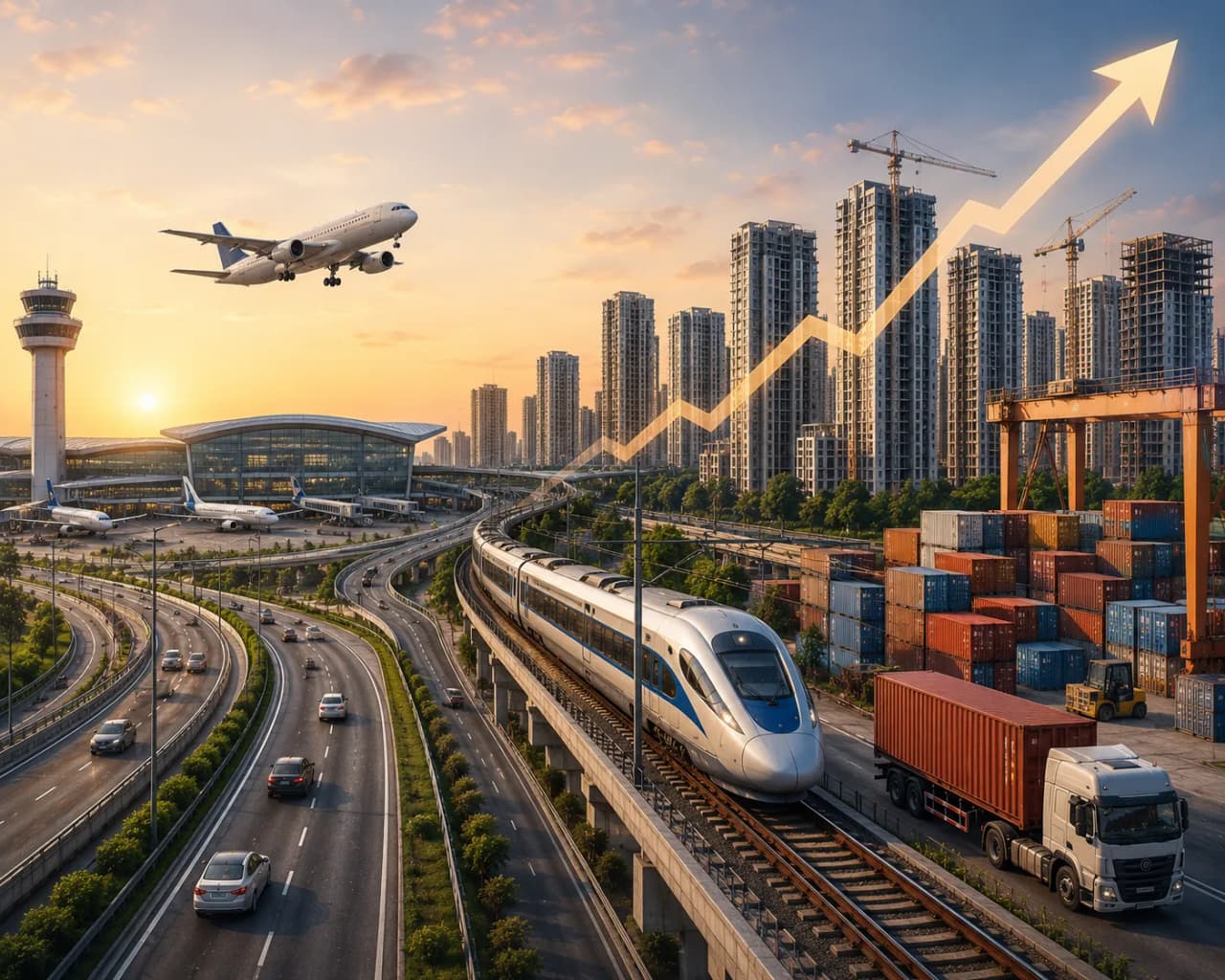
"Expressways, airports, railways, and logistics corridors are fueling property demand across India as investors target infrastructure-led real estate zones."
India’s real estate sector is increasingly being shaped by one of the country’s biggest economic transformation themes — infrastructure-led development. Across multiple regions, major projects such as expressways, airports, logistics corridors, industrial hubs, metro rail systems, and railway expansion initiatives are becoming powerful catalysts for property demand and long-term urban growth.
As infrastructure development accelerates, investors, developers, businesses, and homebuyers are rapidly shifting their focus toward regions connected to large transportation and connectivity projects. These infrastructure-led investment zones are emerging as some of the fastest-growing real estate markets in the country, creating opportunities across residential, commercial, industrial, logistics, and mixed-use segments.
Over the last decade, India has significantly increased public infrastructure spending as part of its long-term economic growth strategy. The government’s focus on highways, dedicated freight corridors, airport modernization, industrial corridors, smart cities, and urban connectivity projects is reshaping regional development patterns and unlocking new real estate opportunities beyond traditional metropolitan centers.
Historically, property growth in India was concentrated around a few large metro cities such as Mumbai, Delhi, Bengaluru, and Chennai. However, infrastructure expansion is now decentralizing growth and creating new investment hotspots across Tier-2 and Tier-3 cities as well as peripheral urban corridors.
One of the most influential drivers of this transformation has been the expansion of India’s expressway network. Large highway and expressway projects are dramatically improving connectivity between cities, reducing travel times, and increasing economic activity across previously underdeveloped regions.
Projects such as the Delhi-Mumbai Expressway, Ganga Expressway, Dwarka Expressway, Yamuna Expressway, Mumbai-Nagpur Samruddhi Mahamarg, and Bengaluru-Chennai Expressway are already generating strong real estate momentum in surrounding areas. Improved connectivity has increased demand for residential townships, industrial parks, logistics hubs, warehousing facilities, and commercial developments near these corridors.
The Delhi-Mumbai Expressway, for example, is expected to significantly transform real estate activity across multiple states including Haryana, Rajasthan, Gujarat, and Maharashtra. Areas located near interchanges and industrial nodes are witnessing rising land values and growing investor interest due to anticipated economic expansion and improved accessibility.
Similarly, the Ganga Expressway is creating new real estate opportunities across Uttar Pradesh by improving east-west connectivity and supporting industrial growth. Tier-2 cities and emerging towns connected to the corridor are attracting developers and investors seeking long-term appreciation potential.
Airport infrastructure is another major factor driving infrastructure-led real estate growth. India has been aggressively expanding and modernizing its airport network to support increasing passenger traffic and economic activity. New airports and airport expansions are transforming surrounding regions into major commercial and residential investment hubs.
Cities such as Noida, Hyderabad, Navi Mumbai, and Goa are witnessing substantial property demand due to airport-linked infrastructure development. The upcoming Noida International Airport at Jewar, in particular, has become one of India’s most significant real estate growth catalysts.
The airport project is attracting investments across residential, hospitality, logistics, warehousing, and industrial segments. Developers are actively launching integrated townships, premium housing projects, hotels, and commercial developments in nearby regions due to expectations of future economic activity and employment generation.
Airport-led development has become especially important because modern airports often function as integrated economic ecosystems. They attract business parks, convention centers, hospitality projects, retail hubs, logistics infrastructure, and transportation networks, creating long-term urban expansion opportunities.
Logistics corridors and industrial infrastructure are also reshaping India’s property market. The rapid growth of e-commerce, manufacturing, and supply chain modernization has increased demand for warehousing and logistics facilities across the country. Dedicated freight corridors, industrial corridors, and multimodal logistics parks are supporting this transformation.
The Delhi-Mumbai Industrial Corridor (DMIC), Chennai-Bengaluru Industrial Corridor, and Eastern & Western Dedicated Freight Corridors are creating large-scale opportunities for industrial and logistics real estate development. Areas located near logistics hubs and industrial clusters are witnessing rising land demand and infrastructure investment.
Warehousing and logistics real estate has become one of the fastest-growing property segments in India due to changing consumption patterns, digital commerce growth, and manufacturing expansion. Institutional investors are increasingly allocating capital toward logistics parks and industrial assets because of strong long-term demand fundamentals.
Railway modernization and metro expansion projects are further contributing to infrastructure-led real estate growth. Improved rail connectivity increases accessibility, reduces commuting time, and enhances the attractiveness of residential and commercial zones.
Metro rail systems in cities such as Pune, Ahmedabad, Lucknow, and Nagpur are driving property demand near transit corridors. Transit-oriented development (TOD) is becoming a major urban planning strategy where residential, office, and retail developments are concentrated around transportation hubs.
Properties located near metro stations and transportation corridors often experience stronger appreciation and higher occupancy demand due to improved connectivity and convenience. Developers are increasingly targeting such micro-markets for mixed-use and high-density urban projects.
Infrastructure development is also changing investor behavior across India. Earlier, investors primarily focused on established metro markets. Today, infrastructure visibility and future connectivity potential are becoming major decision-making factors for property investment.
Investors are increasingly identifying “future growth corridors” based on planned infrastructure projects rather than current market conditions alone. Regions with upcoming expressways, industrial zones, airports, or metro connectivity are attracting speculative and long-term investment activity.
The rise of infrastructure-led development is especially benefiting Tier-2 and Tier-3 cities. Improved connectivity is reducing the economic gap between metropolitan and smaller cities, allowing businesses and residents to expand into emerging urban centers. Cities such as Indore, Surat, Coimbatore, Kochi, Jaipur, and Lucknow are becoming increasingly attractive due to infrastructure upgrades and industrial expansion.
Residential real estate demand in these cities is also rising as infrastructure improves lifestyle quality and economic opportunities. Better roads, public transportation, healthcare facilities, educational institutions, and commercial infrastructure make these regions more livable and investment-friendly.
Commercial real estate is benefiting significantly from infrastructure-led growth as well. Businesses prefer locations with strong transportation connectivity, logistics access, and employee convenience. Infrastructure projects improve business efficiency and support long-term commercial expansion.
Infrastructure-led urbanization is also encouraging the growth of integrated townships and mixed-use developments. Developers are increasingly creating self-sustained urban ecosystems that combine residential, office, retail, hospitality, healthcare, and educational infrastructure within a single development zone.
The government’s Smart Cities Mission and urban modernization initiatives are further supporting this transformation. Planned urban development, digital infrastructure, sustainable mobility systems, and improved civic amenities are making infrastructure-led cities more attractive for investment.
Institutional investors are actively participating in infrastructure-driven real estate markets due to strong long-term growth potential. Pension funds, sovereign wealth funds, private equity firms, and REITs are increasingly targeting office parks, logistics hubs, industrial assets, and mixed-use developments located near major infrastructure corridors.
Technology and data analytics are also playing an important role in identifying infrastructure-led investment opportunities. Investors and developers now use GIS mapping, infrastructure planning data, mobility analysis, and demographic trends to evaluate emerging growth zones.
However, infrastructure-led real estate growth also comes with challenges. Land acquisition issues, environmental concerns, project delays, regulatory approvals, and urban planning inefficiencies can impact development timelines and investment outcomes.
Uncontrolled speculative activity in infrastructure corridors can sometimes lead to price inflation without corresponding end-user demand. Experts therefore emphasize the importance of balanced and sustainable development rather than purely speculative land investments.
Environmental sustainability is another critical consideration. Large infrastructure projects can impact ecosystems, agricultural land, and natural resources if not managed responsibly. Sustainable urban planning and environmental safeguards will remain essential as infrastructure expansion continues.
Another challenge is ensuring that supporting social infrastructure keeps pace with physical connectivity improvements. Schools, hospitals, water supply systems, waste management, and public services are equally important for creating sustainable urban ecosystems.
Despite these challenges, the long-term outlook for infrastructure-led real estate growth remains highly positive. India’s economic growth ambitions depend heavily on infrastructure modernization, and the government continues to prioritize large-scale capital expenditure toward connectivity and urban development.
Experts believe that infrastructure development will remain one of the strongest structural drivers of India’s property market over the next two decades. As new transportation networks and industrial corridors emerge, real estate demand is expected to spread across broader geographic regions rather than remaining concentrated in a few major metros.
This shift could lead to more balanced urbanization and regional economic development across the country. Infrastructure-led growth has the potential to create new cities, business hubs, industrial zones, and lifestyle destinations that support long-term economic expansion.
In conclusion, infrastructure-led real estate growth is becoming one of the defining trends shaping India’s property market. Expressways, airports, logistics corridors, railways, and metro projects are not just improving connectivity they are transforming regional economies and creating entirely new investment ecosystems.
Developers, investors, businesses, and homebuyers are increasingly recognizing the importance of infrastructure visibility in determining future property value and economic growth potential. As India continues investing heavily in transportation and urban infrastructure, infrastructure linked real estate markets are likely to remain among the strongest growth drivers for the sector in the years ahead.