Infrastructure Projects Continue Powering India’s Realty Market Growth
Metro projects, expressways, airports, and logistics corridors are boosting property demand across Tier-2 and NCR-linked cities, attracting investors.

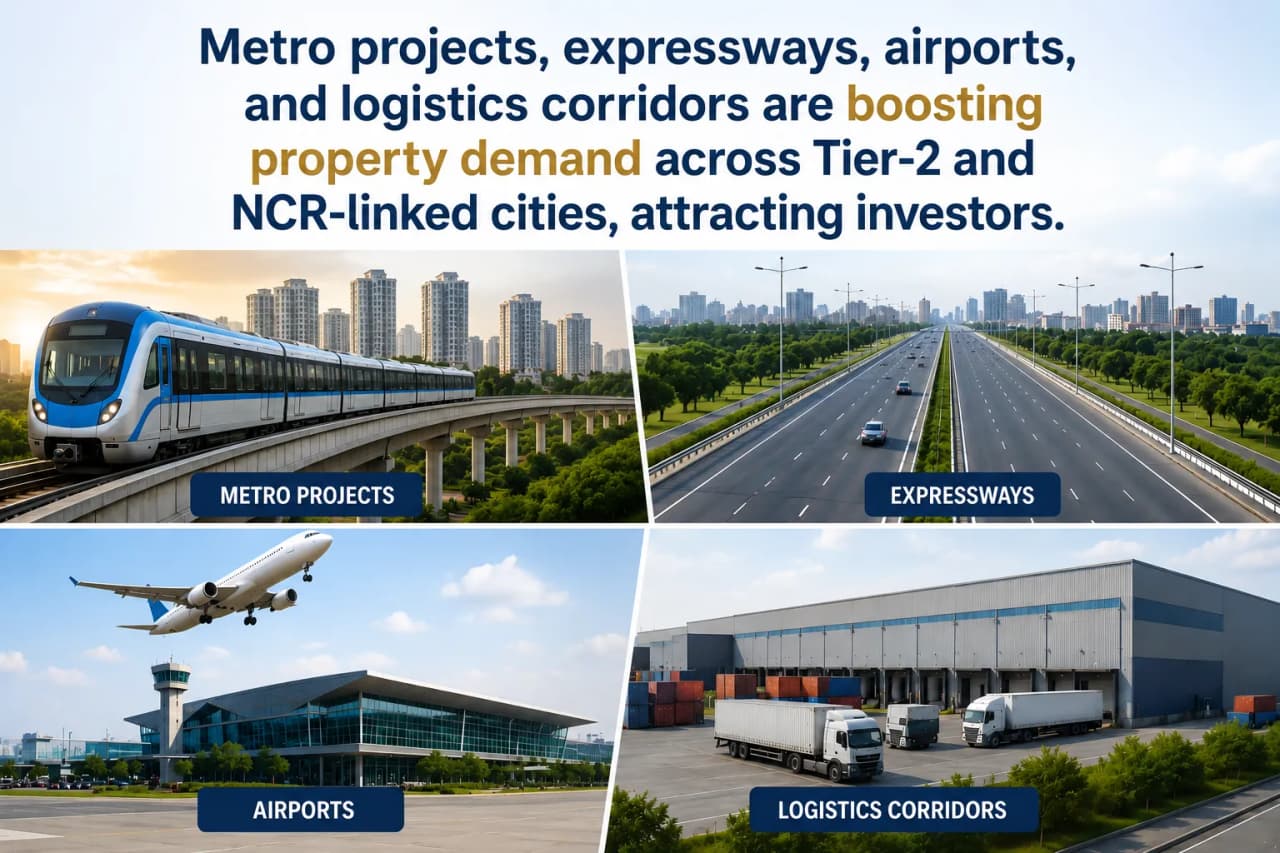
"Metro projects, expressways, airports, and logistics corridors are boosting property demand across Tier-2 and NCR-linked cities, attracting investors."
Indias real estate market is growing fast. The main reason for this growth is the development of infrastructure. Over the country big projects like metro rail networks, expressways, airports and logistics corridors are changing the way regional economies work and how people invest in property.
Experts in the real estate sector think that infrastructure development is the important thing for Indias property market right now. Investors, developers, businesses and people who want to buy homes are all looking for places that are connected to transportation and connectivity projects. This is especially true for cities and areas that are growing near the National Capital Region.
You can see this change happening around the Noida International Airport, big expressways, metro expansion projects and industrial infrastructure corridors. These areas are becoming very popular for long-term investments because people think they will be economically strong in the future and it will be easy to get
Over the ten years the Indian government has spent a lot of money on infrastructure development. They have built highways, airports and railway systems and they have also worked on urban redevelopment programs. These projects are not making it easier for people to get around but they are also creating new economic systems that support the demand for real estate.
In the past Indias property market was mostly focused on cities like Mumbai, Delhi, Bengaluru and Chennai.. Now infrastructure development is spreading growth to smaller cities and areas on the outskirts of big cities.
Tier-2 cities are benefiting a lot from this change. Better roads, airports and digital infrastructure are making these cities more attractive to businesses and people who want to live. As it becomes easier to get developers are building more residential, commercial and mixed-use projects in these cities.
Cities like Lucknow, Indore, Surat, Jaipur, Ahmedabad and Coimbatore are seeing a lot of growth in their real estate markets because of infrastructure development and industrial expansion.
One of the talked-about infrastructure projects right now is the Noida International Airport in Jewar. This airport is going to be a catalyst for residential, hospitality, logistics, retail and industrial development in the area. It will create a lot of jobs. Stimulate economic growth, which will make the surrounding areas more valuable.
The airports location, combined with its connection to expressways and industrial corridors makes it an attractive place for investors. Other infrastructure projects, like the Yamuna Expressway and Eastern Peripheral Expressway are also making the area more accessible and increasing its development potential.
Expressways are becoming a driver of real estate growth in India. They reduce travel time expand boundaries and make it possible to develop land that was previously hard to reach.
Big projects like the Delhi-Mumbai Expressway, Dwarka Expressway, Ganga Expressway, Mumbai-Nagpur Samruddhi Mahamarg and Bengaluru-Chennai Expressway are changing the way regional property markets work. Areas near these corridors are becoming very popular with developers, investors and people who want to buy homes.
For example the Dwarka Expressway has turned parts of Gurugram into residential and commercial hubs. The area is now more attractive to end-users and investors because it is easier to get to Delhi and the airport.
The Delhi-Mumbai Expressway is expected to create economic zones across several states, including Haryana, Rajasthan, Gujarat and Maharashtra. Industrial parks, logistics hubs and residential projects will likely develop around interchanges and commercial nodes connected to the expressway.
Metro rail expansion is also driving real estate growth. Metro connectivity makes it easier for people to get around and reduces commuting challenges in populated cities. Properties near metro stations are in demand and tend to appreciate more in value.
Metro systems in cities like Pune, Nagpur, Ahmedabad and Lucknow are driving transit-oriented development. Creating new residential and commercial growth zones.
Transit-oriented development is becoming an important urban planning strategy. Developers are focusing on density mixed-use projects near transportation hubs to make them more accessible and convenient. These projects often combine retail, office and recreational infrastructure within walkable urban ecosystems.
Airport-led development is also gaining momentum in several regions. Modern airports are like engines that attract businesses, logistics companies, hotels, convention centers and commercial activity. As airport infrastructure expands surrounding areas often develop into integrated business districts.
In addition to the Noida International Airport, airport-linked development is driving property growth in regions surrounding Hyderabad, Navi Mumbai, Goa and Bengaluru.
Logistics and industrial corridors are also changing Indias property market. The growth of e-commerce, manufacturing and supply chain modernization has created a lot of demand for warehousing and logistics infrastructure.
Projects like the Delhi-Mumbai Industrial Corridor, Dedicated Freight Corridors and multimodal logistics parks are supporting scale industrial and logistics real estate development. Institutional investors are targeting warehouse parks, industrial assets and logistics hubs because they have long-term demand fundamentals.
Smart-city initiatives are also supporting infrastructure-led urbanization. The Smart Cities Mission aims to improve infrastructure, digital connectivity, public services and sustainability standards across selected cities. This is making these cities more attractive to investors and more livable.
The rise of infrastructure-led development is changing the way investors approach real estate markets. Of just looking at current market conditions and city reputation investors are now focusing on future infrastructure visibility and long-term connectivity potential.
Regions connected to expressways, airports, metro corridors and industrial zones are seeing a lot of investment activity. Investors think that infrastructure development will increase the value of surrounding properties in the term.
The demand for housing in infrastructure-linked regions is also rising fast. Homebuyers want locations with connectivity, reduced travel time, modern infrastructure and access to employment centers. Infrastructure improvements make life better. Make peripheral areas more attractive for residential living.
Developers are creating integrated townships and mixed-use communities in infrastructure-driven markets. These projects combine housing, office spaces, retail, healthcare, education and recreational infrastructure within an ecosystem offering convenience and self-sustained urban living.
Commercial real estate is also benefiting from infrastructure growth. Businesses want locations with transportation connectivity, logistics access and workforce availability. Infrastructure projects improve efficiency and support long-term commercial expansion.
Institutional investors like pension funds, sovereign wealth funds, private equity firms and REITs are actively investing in infrastructure-linked real estate assets. Commercial office parks, industrial corridors, warehousing facilities and mixed-use developments located near infrastructure projects are attracting a lot of capital.
Technology and data analytics are helping investors identify emerging growth corridors. Real estate firms are using information systems, mobility analysis, infrastructure planning data and demographic trends to evaluate long-term investment opportunities.
However infrastructure-led growth also presents some challenges. Rapid urban expansion can put pressure on services, water supply, waste management and transportation systems if not managed well. Sustainable urban planning and balanced development are essential for long-term success.
Land acquisition complexities and regulatory approvals can sometimes delay infrastructure projects and affect surrounding real estate timelines. Environmental concerns also need to be managed especially in sensitive regions.
Speculative investment activity in infrastructure corridors can sometimes lead to price inflation without corresponding end-user demand. Experts advise investors to focus on long-term fundamentals than short-term speculation.
Despite these challenges the long-term outlook for infrastructure-driven real estate growth is very positive. Indias economic ambitions depend heavily on infrastructure modernization. The government continues to prioritize connectivity and urban development as key pillars of national growth.
Experts believe infrastructure expansion will continue driving property demand across segments, including residential, commercial, logistics, industrial, hospitality and retail real estate. The combination of urbanization, economic growth, digital transformation and transportation connectivity creates a foundation for sustained market expansion.
The next decade will likely see the emergence of new urban corridors and investment zones across India. Infrastructure-led growth could reduce the concentration of activity in a few big cities and support more balanced regional development.
In conclusion infrastructure is the driver of Indias real estate growth story. Metro projects, expressways, airports, logistics corridors and smart-city expansion are transforming economies and creating new property investment opportunities.
Markets, near the Noida International Airport, major expressways and industrial corridors are attracting investor attention because of their future growth potential and connectivity advantages. Developers, institutional investors, businesses and homebuyers are all recognizing that infrastructure visibility has become one of the important indicators of future real estate value.
As India continues to invest in transportation and urban modernization infrastructure-led development is expected to remain the defining force shaping the countrys real estate sector for decades to come.