3D to 7D BIM: Transforming Real Estate Across the Building Lifecycle
BIM has evolved from 3D to 7D, transforming real estate with better planning, cost efficiency, sustainability, and lifecycle management.
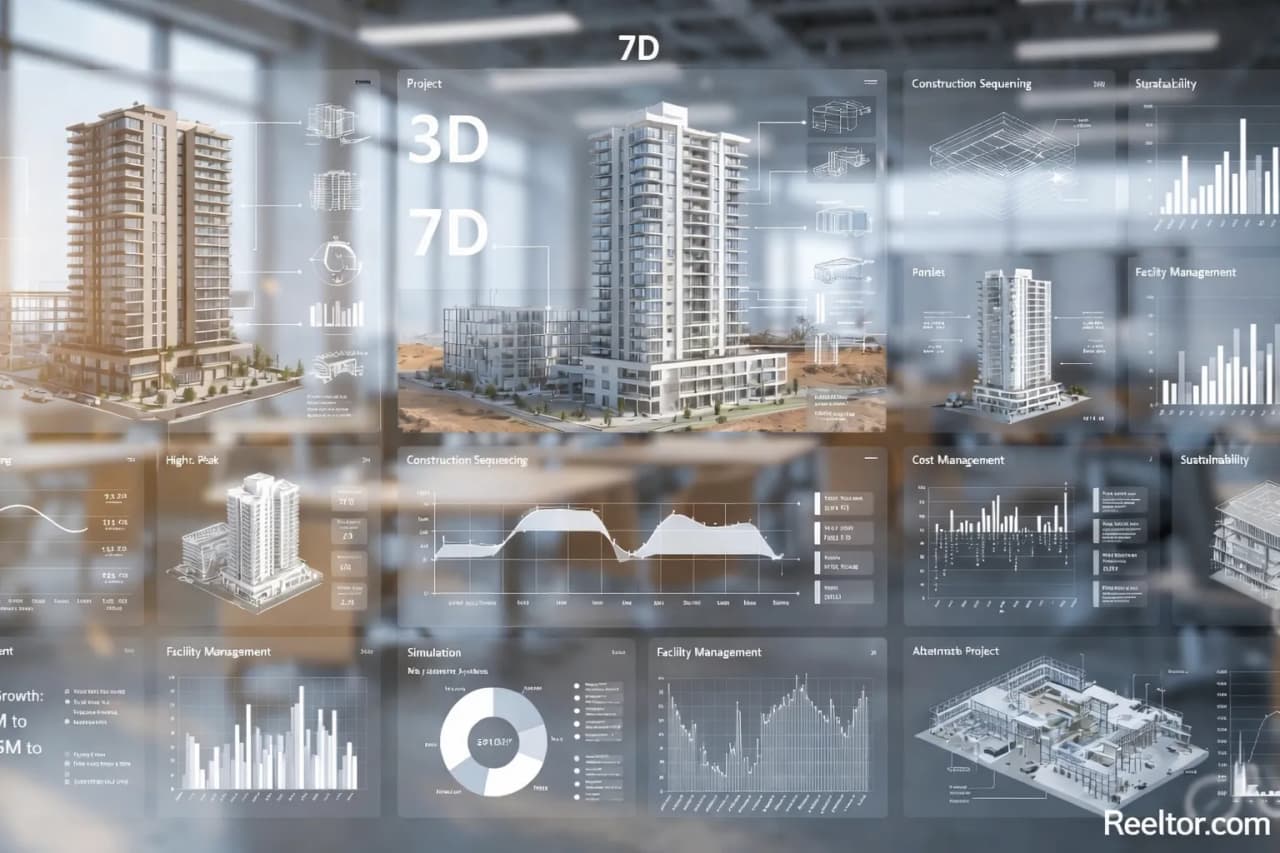
"BIM has evolved from 3D to 7D, transforming real estate with better planning, cost efficiency, sustainability, and lifecycle management."
Building Information Modelling (BIM) has evolved significantly over the years, transforming from basic 2D drawings into a sophisticated multi-dimensional digital platform that enhances every stage of a building’s lifecycle. Today, BIM goes far beyond visualisation, integrating data, processes, and intelligence into a unified system that is reshaping the real estate and construction industry.
Initially, BIM started as 3D modelling, focusing on creating a digital representation of a building’s physical and functional characteristics. This stage improved visual clarity, enabled clash detection, and reduced design errors. It also helped stakeholders better understand the project before construction began, leading to faster approvals and improved coordination between architects, engineers, and contractors.
The evolution continued with 4D BIM, which introduced the time dimension. By integrating scheduling into the model, developers could simulate construction sequences and timelines. This helped in identifying potential delays, managing resources efficiently, and avoiding conflicts during execution—especially in complex projects like high-rise buildings.
5D BIM added cost estimation into the equation, making budgeting more dynamic and accurate. With real-time cost updates linked to design changes, developers could make informed decisions regarding materials and construction methods. This improved financial planning, reduced wastage, and optimised capital expenditure.
The introduction of 6D BIM marked a major step towards sustainability. It enabled simulation of energy consumption, environmental impact, lighting, ventilation, and HVAC systems. This allowed developers to design eco-friendly buildings, achieve green certifications such as LEED and IGBC, and significantly reduce operational costs over time.
Finally, 7D BIM focuses on facility and asset management. It incorporates lifecycle data such as maintenance schedules, warranty details, and asset tracking. This ensures efficient post-construction management, enables predictive maintenance, and extends the lifespan of building components. It also helps property managers make data-driven decisions and optimise operational expenses.
The application of BIM across real estate is vast. In residential projects, it helps streamline construction timelines and minimise errors. In commercial spaces, it supports energy optimisation and sustainable design. Across all projects, BIM improves collaboration among stakeholders and enhances project transparency.
Despite its advantages, BIM adoption comes with challenges such as high implementation costs, the need for specialised software, and skilled professionals. However, these challenges can be addressed through training, cloud-based solutions, and adherence to global standards like ISO 19650.
Looking ahead, BIM is expected to integrate with emerging technologies like Artificial Intelligence, Internet of Things (IoT), digital twins, and augmented reality. These advancements will enable real-time monitoring, predictive analytics, and immersive visualisation, making projects smarter and more efficient.
In India, the BIM market is witnessing rapid growth. It is projected to grow from USD 360.6 million in 2025 to USD 1,066.5 million by 2034, at a CAGR of 11.04%. This growth reflects the increasing adoption of digital construction technologies and the demand for efficient, sustainable, and cost-effective real estate development.
Overall, BIM is not just a tool but a transformative approach that is redefining how buildings are designed, constructed, and managed.