LPG Crisis in India: Will Apartments with Piped Natural Gas (PNG) Connections Command Higher Rents?
Rising global tensions may trigger an LPG shortage in India. Experts say homes with PNG connections could soon gain an edge and potentially command higher rents.
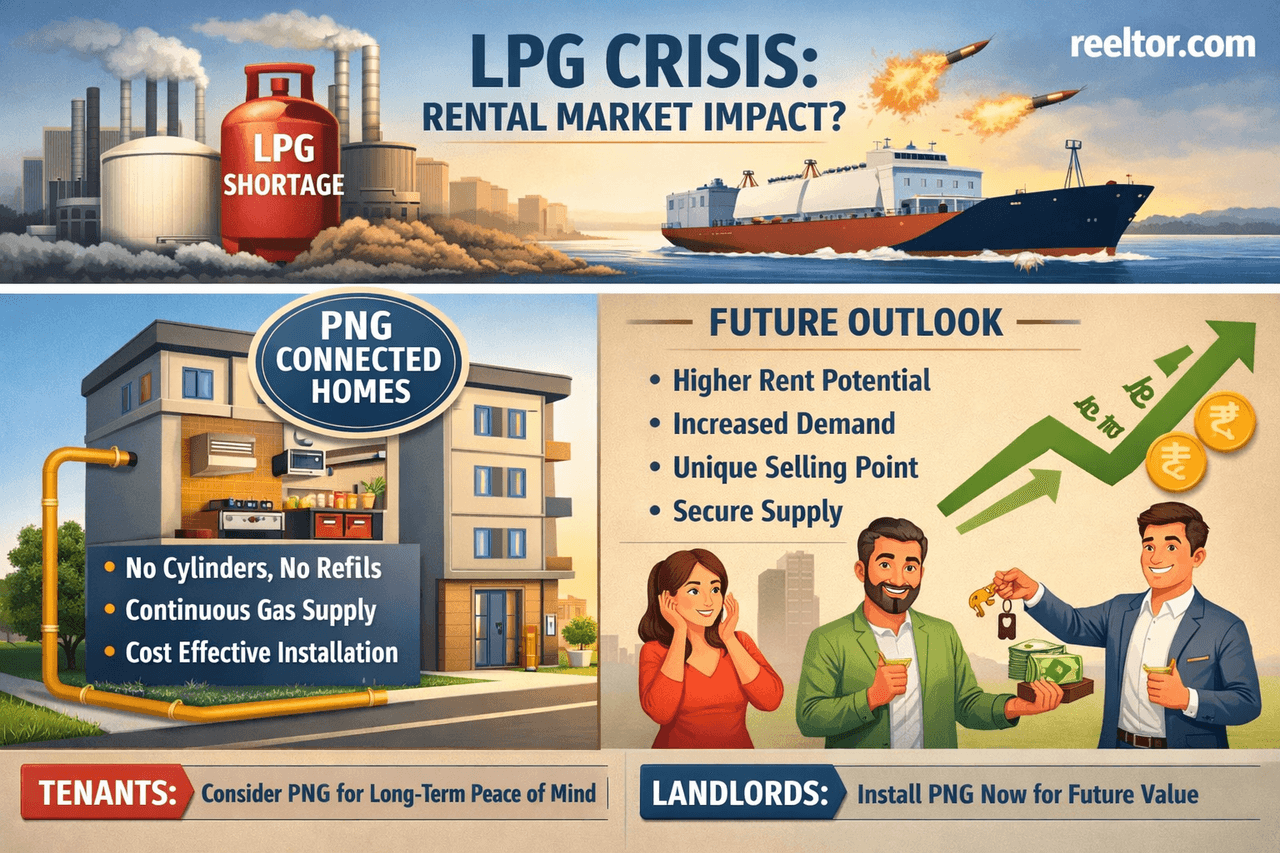
"Rising global tensions may trigger an LPG shortage in India. Experts say homes with PNG connections could soon gain an edge and potentially command higher rents."
Rising geopolitical tensions involving Iran, Israel and the United States are creating ripple effects across global energy markets, sparking concerns about fuel supply disruptions. In India, these developments have triggered worries about a potential shortage of LPG cylinders, the primary cooking fuel for millions of households. India imports large volumes of LNG—which is also used to produce Piped Natural Gas (PNG)—from countries such as Qatar, United Arab Emirates, United States and Oman. Any disruption in these supply chains could directly affect domestic cooking gas availability and prices.
In this uncertain environment, Piped Natural Gas (PNG) is increasingly being discussed as a reliable alternative for urban households. Unlike LPG cylinders, which require booking, delivery, and refilling, PNG is supplied continuously through underground pipelines. For many residents, the convenience is significant: there are no heavy cylinders to handle, no last-minute refill worries, and the supply is typically uninterrupted. Because of these benefits, real estate observers are beginning to question whether apartments already connected to PNG networks could soon become more attractive to renters and potentially command higher rents.
However, according to property brokers across major urban markets such as Delhi-NCR and Bengaluru, PNG connectivity is not yet a decisive factor for most tenants. When people search for rental homes, their priorities remain largely unchanged. Location, proximity to workplaces or public transport, affordability, amenities, and furnishing status still dominate decision-making. Many tenants also have specific preferences such as sunlight exposure, building floor, or society facilities, which often outweigh concerns about cooking fuel options.
Another reason PNG has not yet become a major differentiator is the relatively simple installation process. In cities where city gas distribution infrastructure already exists, landlords can add a PNG connection fairly quickly and at a modest cost. Industry estimates suggest the installation typically costs around ₹6,000 and can often be completed within about a week. Because the upgrade is both affordable and quick, landlords can install the connection when tenants request it, which limits the immediate rental premium associated with PNG-ready homes.
Meanwhile, the government has begun taking steps to manage potential supply stress. Under the Essential Commodities Act, 1955, authorities have prioritised domestic PNG and CNG distribution. On 14 March 2026, the Ministry of Petroleum and Natural Gas announced a new rule stating that households with PNG connections will no longer be allowed to keep or refill domestic LPG cylinders. The aim is to ensure that LPG cylinders remain available for families living in areas where pipeline gas infrastructure is not yet available.
Cities such as Delhi already have a substantial PNG network. Official data indicates that more than 17 lakh homes in the capital are connected to PNG pipelines, largely supplied by Indraprastha Gas Limited. This existing infrastructure means many apartment complexes and housing societies are already equipped to provide PNG connections to residents.
If the LPG shortage turns out to be prolonged, real estate experts believe the dynamics of the rental market could shift. Apartments located in societies with established PNG pipelines may gain a competitive advantage, while independent builder floors without access to the network could see relatively weaker demand. Over time, analysts suggest that properties with PNG connectivity could command a moderate rent premium of around 5–10 percent in major urban markets.
For now, traditional factors like location and price continue to dominate rental decisions. Yet the current energy uncertainty highlights how quickly everyday utilities can influence housing choices. For landlords, installing a PNG connection may be a low-cost upgrade that improves a property’s appeal. For tenants, choosing a home with PNG could provide long-term convenience and protection against potential LPG supply disruptions.